

Baby Crib vs Baby Cot in Pakistan: What Every New Parent Needs to Know Before Buying
Somewhere between the excitement of preparing a nursery and the overwhelm of a hundred online listings, most new parents in Pakistan hit the same wall: what exactly is the difference between a baby crib and a baby cot? And beyond the terminology, how do you know which one is safe, durable, and worth buying?
This guide answers both questions — and goes further, walking you through everything from materials and safety checks to price ranges and what to look for in a nursery setup in a Pakistani home.
Crib vs Cot: Is There Actually a Difference?
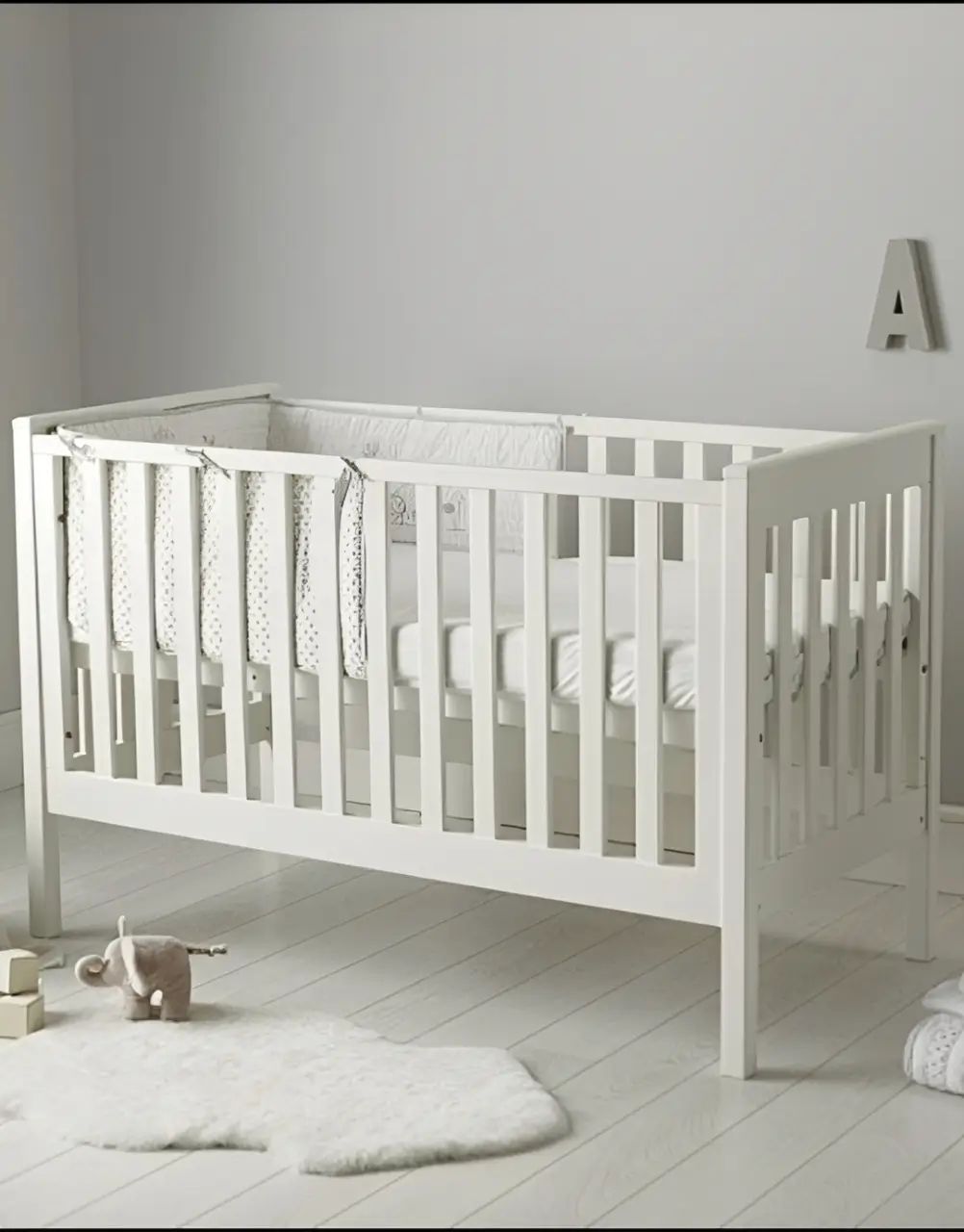
In Pakistan, the terms “baby crib” and “baby cot” are used almost interchangeably — and for good reason: in most local contexts, they refer to the same thing. Both describe a small enclosed bed with slatted sides designed for infants and toddlers.
In international usage, there’s a subtle distinction: – A crib is typically a smaller, fixed-side bed for newborns up to around 18 months. – A cot is slightly larger and more common in British English — it’s what most Pakistanis grew up calling the standard baby sleeping furniture.
When shopping in Pakistan, don’t get too hung up on the label. Focus instead on dimensions, safety features, and whether the design suits your home and your baby’s age.
What Makes a Baby Crib Safe?
Safety is non-negotiable when it comes to infant sleeping furniture. Unlike adult furniture, where aesthetics often lead the buying decision, a baby crib needs to meet specific standards first.
Here’s what to check:
Slat spacing.
The vertical bars or slats of the crib should be no more than 6 cm (about 2.4 inches) apart. Wider gaps create a risk of the baby’s head getting stuck — a serious and sadly common accident with older or low-quality cribs.
No drop-side mechanism.
Older-style cribs had a side that could be lowered for easy access. These have been phased out in most countries after being linked to infant deaths due to structural failure. Avoid any crib that has a movable side.
Firm, flat mattress support.
The base of the crib should be completely flat and firm. Do not place a soft mattress or extra padding in a crib.
No protruding hardware.
Bolts, screws, or decorative elements that stick out can catch on clothing or scratch the baby. Check the inside of the crib carefully before buying.
Non-toxic paint or finish.
Babies chew on crib rails. The paint or deco finish used must be non-toxic and free from lead. Always ask the manufacturer or seller about the finish type.
Structural stability.
Shake the crib gently in the store or showroom. There should be absolutely no wobble. A crib that shifts or creaks under mild pressure is not stable enough for an infant.
Types of Baby Cribs Available in Pakistan
The Pakistani market has evolved considerably over the last few years. Here are the main types you’ll encounter:
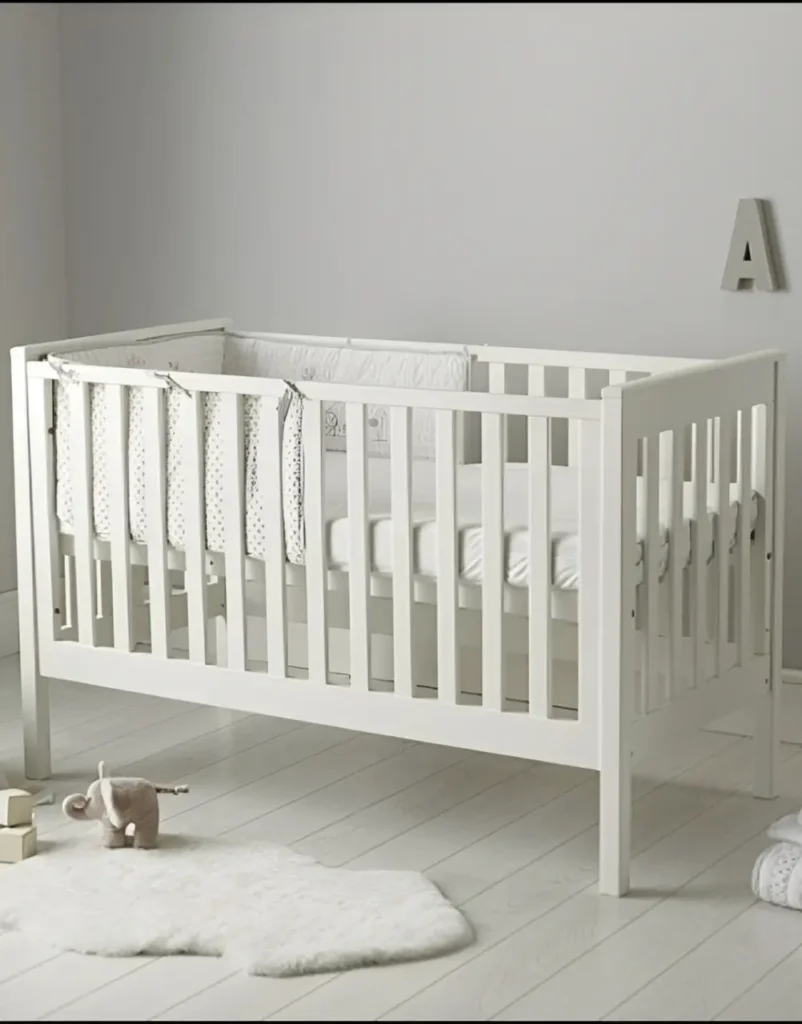
Standard fixed cribs are the most common — a four-sided enclosed bed with adjustable mattress height (usually two or three levels). As the baby grows, you lower the mattress to prevent climbing out. These work from birth through roughly 18–24 months.
Convertible cribs are a smarter long-term investment. They’re designed to be converted into a toddler bed (and sometimes even a daybed) as the child grows. You remove one side panel and add a toddler guardrail. This extends the life of the furniture well beyond infancy.
Crib and changing table combos or nursery sets include a crib alongside a matching changing table or dresser. These are popular for parents setting up a complete nursery and wanting a cohesive look. Dedicated nursery furniture stores often offer complete sets that include a crib, a small table and chair, and a storage shelf — all in matching colours and finishes.
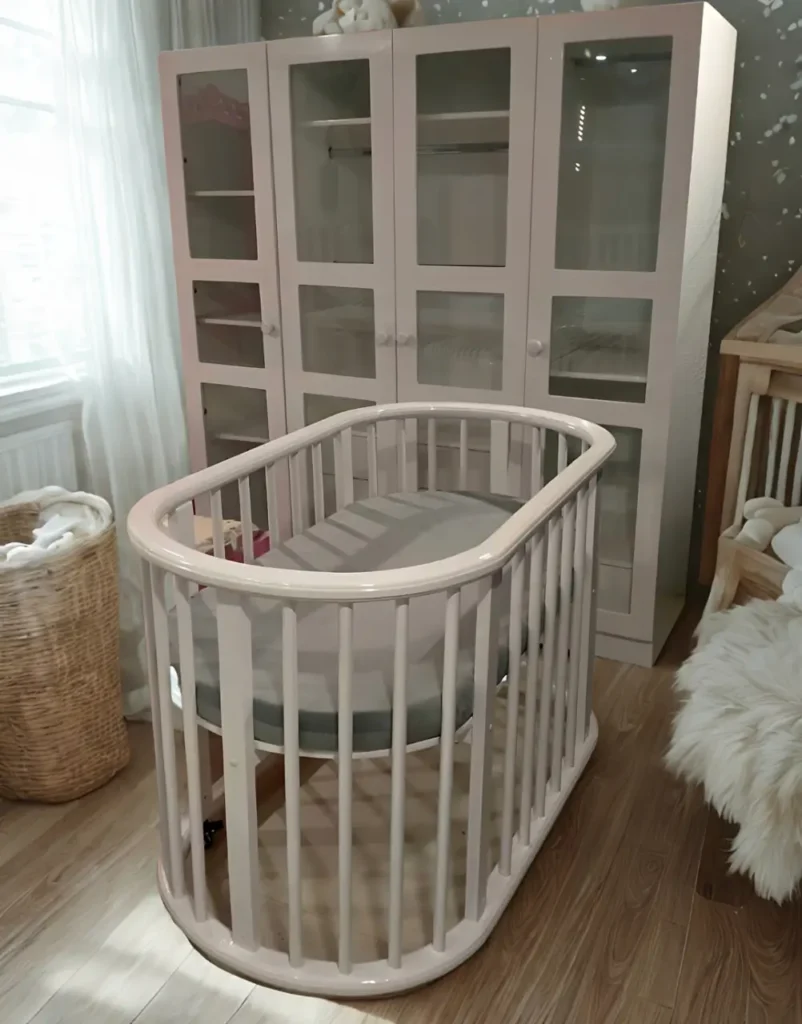
Themed cribs often in princess, forest, or celestial designs — are available from specialty kids’ furniture stores. These add visual charm to a nursery but should still meet the same safety standards as any other crib.
Setting Up a Safe Nursery in a Pakistani Home
A well-designed nursery goes beyond just the crib. Here are practical considerations specific to Pakistani homes:
Humidity and ventilation.
Most Pakistani cities, especially coastal ones like Karachi, have high humidity levels for much of the year. Nursery furniture should be in an air-conditioned room, or at minimum, one with a dehumidifier. Engineered wood furniture in high-humidity spaces without climate control can warp over time.
Crib placement.
Never place a crib directly under an air conditioner vent — the cold draft is harmful to infants. Also keep it away from windows (light disrupts sleep and curtain cords are a strangulation hazard) and away from any wall-mounted shelves that could fall.
Changing table safety.
Always use a changing table with raised edges on all four sides. Never leave the baby unattended on a changing table, even for a second. A changing table placed at a comfortable height (around waist level) reduces back strain for parents during late-night changes.
Lighting.
Soft, warm lighting works better in a nursery than bright overhead lights. A small dimmable lamp is useful for night feeds without fully waking the baby.
Storage.
Babies need more storage than most people expect — nappies, clothes, bath supplies, and toys. Storage racks, small wardrobes, or under-crib drawers are all practical additions to a nursery.
Baby Crib Price Ranges in Pakistan (2025–2026)
Prices vary based on material, design, and whether the crib is part of a set:
•Basic standard crib (engineered wood): PKR 18,000 – 35,000
•Convertible crib: PKR 30,000 – 55,000
•Themed / designer crib: PKR 40,000 – 75,000
•Complete nursery set (crib + changing table + storage): PKR 60,000 – 130,000
Custom-made cribs from specialist kids’ furniture stores — like The Kids Collection in Karachi — often fall in the mid-to-upper range but come with the advantage of specific sizing, custom colour choices, and higher craftsmanship standards. If your nursery has unusual dimensions or you want a specific theme, a custom order is worth the extra cost.
When to Transition Out of the Crib
Most children are ready to move from a crib to a toddler bed or single bed between 18 months and 4 years. Common signs include:
•The child is consistently climbing out of the crib (this becomes a fall risk)
•They’ve reached the crib’s height limit (usually when they’re around 35 inches tall)
•A new sibling is arriving and needs the crib
•The child is actively asking for a “big bed.”
The transition to a regular bed is easier when you involve the child in choosing their new furniture — it builds excitement rather than resistance.
Frequently Asked Questions
Q: What’s the safest sleeping position for a baby in a crib?
Always place infants on their back to sleep — this is the global recommendation for reducing SIDS risk. Keep the crib free of loose blankets, pillows, and stuffed animals for newborns.
Q: How long can a baby use a crib?
Most standard cribs accommodate children up to 2–3 years or until they’re tall enough to climb out safely. Convertible cribs extend this lifespan by transforming into a toddler bed.
Q: Should I buy a new or second-hand crib?
Buying new is strongly recommended for safety reasons. Older cribs may have outdated designs (like drop sides), worn structural joints, or chipped paint that may contain lead. The safety standards for cribs have improved significantly in the last decade.
Q: Can a newborn sleep in a full-size crib?
Yes, but use a properly fitting firm mattress with no gaps between the mattress and the crib sides. A newborn does not need a smaller bassinet if the crib is properly set up.
Final Thoughts
Setting up a nursery is one of the most meaningful preparations new parents make — and the crib or cot sits at the heart of it. Choose one that prioritizes safety above everything else, matches your space and climate conditions, and ideally offers some flexibility to grow with your child.