

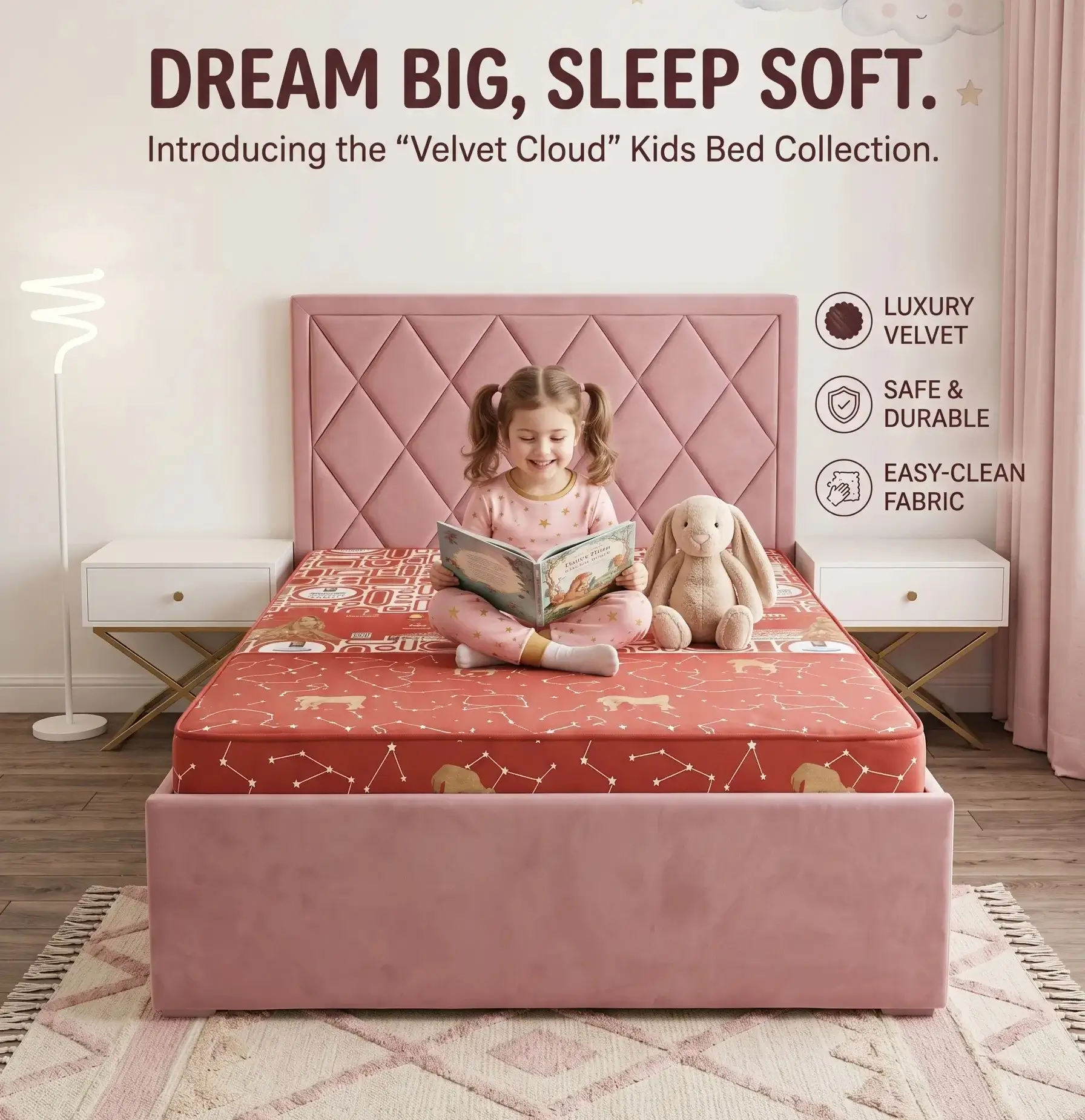
Start With the Layout, Not the Furniture
Kids bedroom is more than a place to sleep. It’s where they read, study, play, build friendships during sleepovers, and quietly grow into themselves. Getting the design right, especially within the practical constraints of Pakistani homes, takes more thought than most parents expect, but it doesn’t have to be overwhelming.
This guide walks through every element of a well-designed kids’ bedroom: layout, furniture selection, storage, lighting, safety, and theme choices. Whether you’re setting up a room for a 3-year-old or redesigning one for a 10-year-old, the principles are the same.
The most common mistake parents make is buying furniture first and figuring out the layout later. This results in rooms that feel cramped, cluttered, or poorly lit — regardless of how nice the individual pieces are.
Before you buy anything, measure your room carefully and draw a simple top-down floor plan. Note the location of windows, doors, electrical outlets, and AC units. Then plan the furniture placement around these fixed points.
Key layout principles for kids bedrooms in Pakistan:
The bed (or bunk bed) should go against a solid wall — not under a window, and not directly under an AC vent. A window above a sleeping child is both a light disruption and a safety concern; an AC vent blowing directly on a sleeping child is a health one.
Leave at least 60–70 cm of clearance around the bed on the access side. Children need to get in and out easily, and if there’s a bunk bed, the ladder side needs even more room.
Place the study table near natural light — ideally with the window to the left side of a right-handed child (this prevents the child casting a shadow on their work while writing). If natural light isn’t available from the right position, a good desk lamp becomes essential.
Choosing the Right Bed for the Age and Room Size
The bed is the anchor piece in any kids’ bedroom. Every other furniture choice flows from it.
For toddlers (ages 2–5): A toddler bed or single bed with low height and side guards works best. At this age, the priority is easy, safe access — they’re still developing coordination and don’t need a high frame.
For school-age children (ages 5–12): This is where the choice opens up significantly. If there’s one child in the room, a loft bed with a study area underneath is an excellent space-saver. If there are two children, a bunk bed — whether a standard two-tier or an L-shaped design — is the most practical option.
For pre-teens (ages 10–14): Children at this age often want a more grown-up space. A sofa-style bed or a single bed with a sophisticated headboard can give the room a more mature feel while still being functional.
Room size matters more than most people admit. A standard Pakistani bedroom of roughly 10 x 12 feet can comfortably fit a bunk bed, a study table for two, and a wardrobe — if the layout is planned properly. A larger room of 12 x 15 feet gives you room to add a dressing table or a small reading corner.

Furniture Selection: What Your Child’s Room Actually Needs
Keep the furniture list focused. Overfurnished rooms feel chaotic — and children need clear floor space to play.
The essentials:
A bed — sized and designed appropriately for the child’s age, as discussed above. At The Kids Collection, we manufacture every piece to order, which means you’re not locked into standard sizes if your room calls for something specific.
A study table with adequate surface space. Children in school need room for notebooks, textbooks, a laptop or tablet, and stationery — all at the same time. A table that’s too small means homework gets done on the bed or the floor, which is bad for posture and focus. Look for a table at least 90 cm wide, with a small bookshelf or storage compartment attached.
A wardrobe. Kids accumulate clothes quickly. A wardrobe with both hanging space and shelves covers most clothing types — school uniforms (which hang), casual clothes (which can be folded), and seasonal items.
The nice-to-haves (if space allows):
A small bookshelf or reading nook. Children who have their books within reach read more. A low shelf they can access independently encourages self-directed reading.
A dressing table. More relevant for older children — particularly girls in the 8–14 age range—a small dressing table with a mirror gives them a dedicated space that’s theirs.
Storage racks or under-bed drawers. The single best way to keep a kids bedroom tidy is to give every item a home. Dedicated storage for toys, art supplies, school bags, and sports equipment makes a real difference.
Colour, Theme, and Personalisation
Children are much more engaged with a room they feel ownership over. When possible, involve them in the design decisions—especially color and theme.
For younger children (under 6): Bright, primary colors—reds, blues, and yellows—are visually stimulating and age-appropriate. Themed furniture (princess beds, car beds, animal motifs) works beautifully at this age.
For children aged 6–10: Themes like space, jungle, underwater, superheroes, or fairy tales are popular and can be carried through in wall colors, bedding, and furniture choices. Many furniture manufacturers in Pakistan now offer themed bunk beds that serve as the centerpiece of this type of room.
For pre-teens: This age group tends to move away from overtly themed rooms toward color-coordinated, more sophisticated spaces. Pastel tones, monochromatic schemes, or one bold accent wall work well. Choose furniture in neutral colors that won’t feel dated as the child’s tastes evolve.
One important note on themes: If you’re investing in furniture — especially custom-made pieces — choose a theme that will last at least 5–7 years. A princess bed is wonderful for a 4-year-old but may feel embarrassing to a 10-year-old. If in doubt, go for beautiful design in neutral tones and let the accessories (bedding, wall art, and curtains) carry the theme — these are far cheaper to replace as the child grows.
Storage: The Most Underrated Element of Kids’ Room Design
No matter how well you design the room, it will look chaotic within a week if there isn’t enough storage. Children’s rooms accumulate items at an astonishing rate—clothes, books, toys, school supplies, and sports equipment.
Practical storage solutions for Pakistani kids’ rooms:
Built-in wardrobes or freestanding almaris with both hanging rails and shelves cover clothing well. Make sure the hanging section is at the child’s height — not adult height — so they can dress independently.
Under-bed storage drawers are one of the most efficient uses of space in a small room. Many bunk beds and single beds can be ordered with drawers built into the base.
Open shelving is great for frequently used items — books, small toys, and art supplies. Position it at the child’s eye level so they can reach without help.
Hooks on the back of the bedroom door are often overlooked but incredibly useful for school bags, sports bags, and jackets—items that tend to end up on the floor without a clear designated spot.
Safety Considerations Specific to Pakistani Homes
Furniture anchoring. Tall wardrobes and bookshelves should be wall-anchored, particularly in earthquake-prone areas or where young children might try to climb them. Many furniture pieces come with wall-anchor fittings — use them.
Electrical outlet placement. In older Pakistani homes, electrical sockets are often at adult waist height. With young children, consider socket covers or choosing furniture that blocks access to sockets near the bed.
Flooring. Marble or tiles — common in Pakistani homes — are hard surfaces that hurt when children fall. A good-quality rug or play mat near the bed and play area reduces injury risk significantly.
Window guards. If the bedroom is above the ground floor, window guards are a sensible safety measure for young children.
Frequently Asked Questions
Q: What furniture is essential for a shared kids’ room?
A bunk bed (to maximize floor space), a shared or individual study table, a wardrobe with sections for each child, and adequate storage for each child’s belongings. Keep the furniture list minimal and the storage generous.
Q: How do I make a small bedroom work for two children?
Bunk beds are your best tool — they convert two beds’ worth of floor space into one. Pair this with a wall-mounted study shelf or a compact study table on the opposite wall, and you can accommodate two children in a 10 x 10 room comfortably.
Q: At what age should a child have their own bedroom?
There’s no universal answer. Shared bedrooms work well until adolescence (around 10–12 years), after which children benefit from more privacy and personal space. If sharing is long-term, invest in good room dividers or well-designed bunk bed configurations that give each child their own defined zone.
Q: How often should I redesign my child’s room?
Major furniture tends to last 7–10 years. A redesign around ages 3–4 (moving out of a toddler setup), 6–7 (school age), and again around 11–13 (pre-teen) tends to align with major developmental shifts in what children need from their space.
Final Thoughts
A well-designed kids’ bedroom doesn’t require a huge budget — it requires thoughtful planning. Start with layout, invest in furniture that will last several years, build in generous storage from the beginning, and involve your child in the choices that matter most to them.